
RESEARCH & DEVELOPMENT UNIT · WHITEPAPER
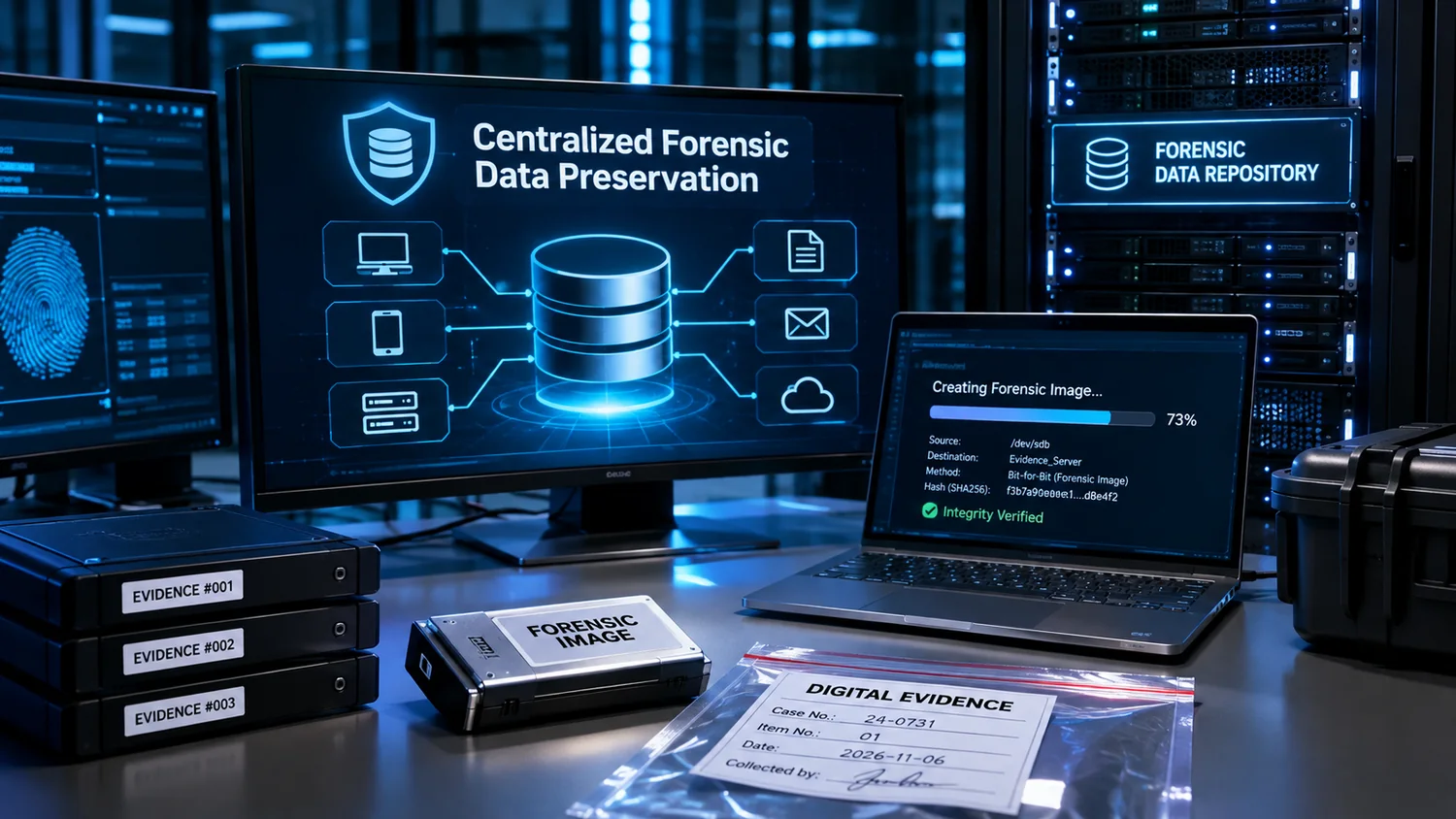
Designing and implementing a secured and centralized forensic data preservation and storage system
Written for the Philippine National Police Crime Laboratory by Federick Joe P. Fajardo and Nino Paquito O. Pedida. Released October 2021; redacted public edition signed January 2022.
ABSTRACT
Forensic science plays an important role in determining evidence-based analysis for criminal cases. Evidence-based decision making together with scientific data establishes robust forensic analysis and interpretation for all forensic disciplines which aids the criminal justice system (McElhone et al. 2016).
To achieve this, a systematic and centralized approach in evidence collection, data preservation and storage system must be presented in the process, thus protecting the confidentiality, integrity, and availability of data in the presentation of evidence during court proceedings.
We will be discussing the necessary components and logical structure in building this system to make it resilient from unauthorized disclosure, tampering and destruction. We will end this paper with a conclusion which might help the organization to prepare and achieve an International Standardization Organization (ISO) ISO/IEC 27001 — Information Security Management System (ISMS) Certification in the future.
THE OBJECTIVE
A chain of custody that holds up in court
The aim
To design and implement a fast and systematic approach that can be utilized within a solid chain-of-custody to preserve and secure digital information representing the manual collection of evidence and forensic data based on scientific testing.
Complete, standard and uniformed reporting — immutable, verifiable, tamper-proof, and admissible in court.
Admissibility relies not only on the evidence, but on the overall process together with the integrity of the personnel who conducted the collection, handling and testing of that evidence. Centralising it also preserves the record for historical purposes — data that can support crime prevention and future reference.
THE ENVIRONMENT
The scale of the problem
The PNP Crime Laboratory as of October 2021.
Crime laboratory offices in the National Capital Region
Regional crime laboratory offices
Crime laboratory offices in the provinces
Ten operating divisions
- Medico-Legal
- Fingerprint Identification
- Forensic Chemistry
- Physical Identification
- Firearms Identification
- Questioned Document Examination
- Forensic Photography
- Polygraph
- DNA
- Scene of Crime Operations
DESIGN FOUNDATIONS
What the design is built on
Information Security Management
The design is written towards an ISO/IEC 27001 Information Security Management System certification, so the control set is auditable rather than ad hoc.
Advanced Encryption Standard
Evidence at rest and in transit is protected using AES as specified in NIST FIPS 197.
Network security zoning
Services are placed across security zones following the Canadian Centre for Cyber Security guidance on zoning and placement.
Immutable chain of custody
Blockchain-based chain-of-custody approaches — Hyperledger and Ethereum among them — are assessed for producing a record that is immutable and verifiable.
READ THE PAPER
Redacted public edition
Redaction notice
The original manuscript contains twelve (12) pages. This is a controlled document, redacted to protect the interest of our solution design, research and development.
- Revision 20211006 — draft, initial release.
- Revision 20220117 — redaction, public edition, digitally signed.
- If you would like a similar solution for your own organisation, get in touch and we will scope it.